


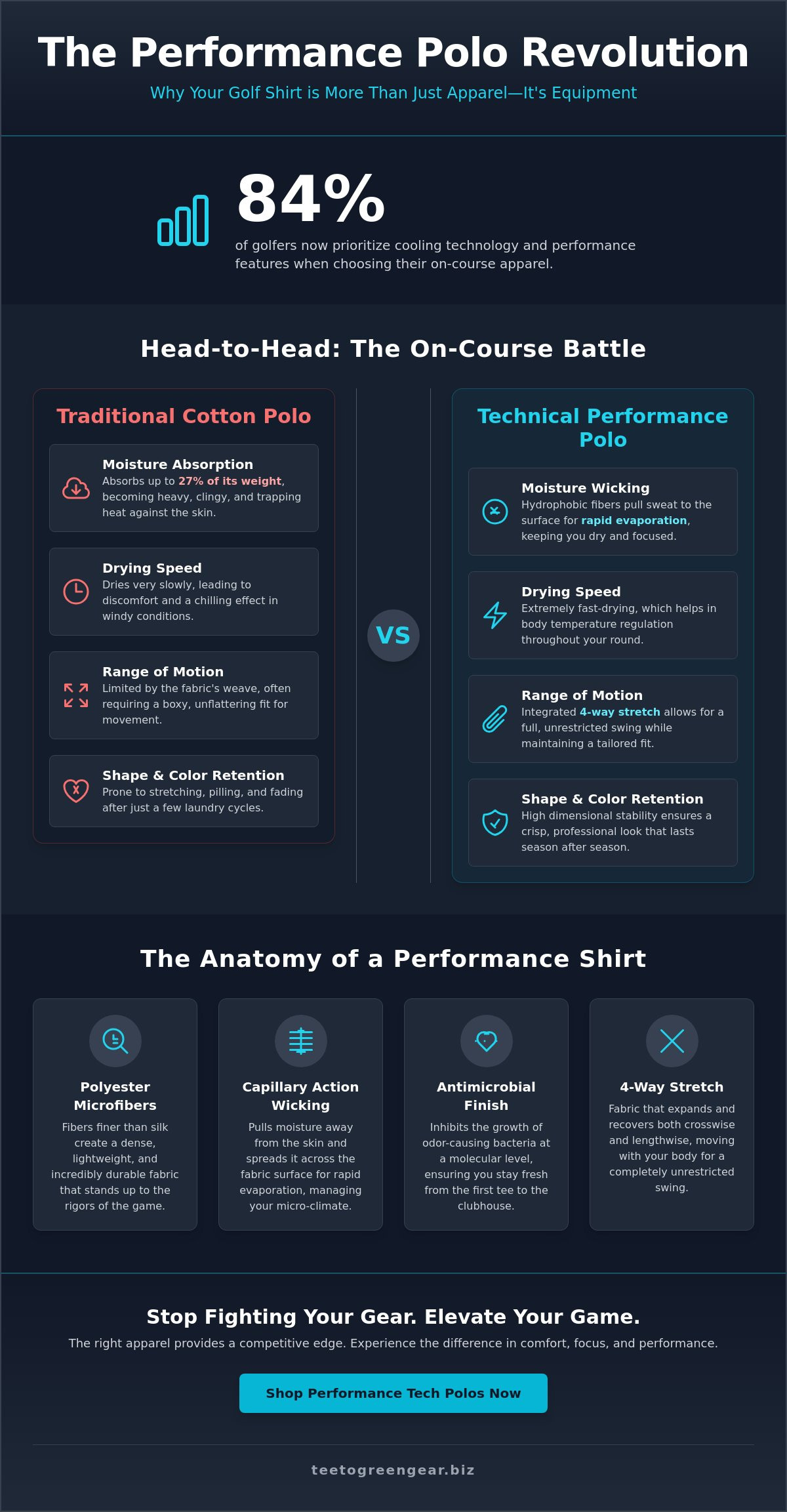
Your classic cotton polo might be the silent saboteur of your back nine performance. While there is a certain nostalgia for traditional natural fibers, the reality of a long round in high humidity often results in a heavy, sweat-soaked garment that restricts your rotation and causes uncomfortable chafing. It’s a common frustration for the dedicated player who values both aesthetic refinement and physical precision. With 84% of golfers now prioritizing cooling technology in their apparel, the shift toward high-performance materials is more than just a trend; it’s a strategic upgrade for your game.
This comparison explores why technical golf shirts have become the essential precision-engineered tool for the modern player. We promise to reveal the scientific differences between advanced synthetic blends and traditional cotton to help you optimize your comfort and focus. We will examine how these fabrics manage your micro-climate to keep you dry, while also ensuring your collar maintains its crisp, professional shape from the first tee to the clubhouse. You’ll discover how the right choice in apparel provides an unrestricted range of motion, allowing your swing to remain fluid and powerful throughout the entire day.
Key Takeaways
- Understand the scientific shift from natural fibers to engineered synthetics and why traditional cotton often hampers performance in humid environments.
- Discover the specific role of polyester microfibers in technical golf shirts and how they actively wick moisture away from the skin to maintain your focus.
- Learn how to evaluate durability features like resistance to pilling and abrasion to ensure your apparel maintains a crisp, professional aesthetic for seasons to come.
- Gain insights into selecting the correct fabric weight for your local climate, ranging from ultra-lightweight summer options to versatile mid-weight blends.
- Explore the intersection of meticulous craftsmanship and functional design that defines the modern standard for sophisticated on-course attire.
Technical Golf Shirts vs. Traditional Cotton: A Performance Comparison
The transition from traditional natural fibers to modern synthetic blends represents a significant milestone in athletic apparel. While cotton was once the standard for the clubhouse, it often fails to meet the rigorous demands of a competitive round. Technical golf shirts are designed to solve the specific frustrations of the active player, moving beyond simple aesthetics to prioritize textile performance characteristics. This shift is driven by the need for garments that remain lightweight and breathable through eighteen holes, ensuring that your focus remains on the pin rather than your discomfort.
To understand the practical differences, consider this direct comparison of material behaviors on the course:
| Feature | Traditional Cotton | Technical Synthetic |
|---|---|---|
| Moisture Absorption | High (up to 27% of weight) | Minimal (Hydrophobic) |
| Drying Speed | Slow and heavy | Rapid Evaporation |
| Shape Retention | Prone to stretching and pilling | High dimensional stability |
| Range of Motion | Limited by weave structure | Integrated 4-way stretch |
While the initial investment in high-end apparel might be higher, the cost-per-wear narrative favors technical options. Cotton tends to lose its structure and color after several laundry cycles, whereas synthetic microfibers maintain their integrity. Additionally, the density of a traditional piqué polo increases significantly as it absorbs sweat. This extra weight, though subtle at first, contributes to physical fatigue during a four-hour round. Choosing a lighter, more efficient fabric helps you maintain your energy levels from the first tee to the final putt.
Moisture Management and the ‘Soggy Polo’ Problem
Cotton is inherently hydrophilic, meaning its fibers are designed to soak up liquid rather than repel it. Research indicates that cotton can absorb approximately 27% of its own weight in moisture. On a humid day, this leads to a heavy, clinging garment that traps heat against your skin. When the wind picks up, that wet fabric creates a sudden chilling effect that can disrupt your rhythm. In contrast, technical fabrics utilize capillary action to pull sweat to the surface for rapid evaporation, keeping your body temperature regulated and your skin dry.
Range of Motion: Mechanical Stretch vs. Added Elastane
A successful golf swing requires an expansive, unhindered rotation. Traditional piqué cotton relies on the looseness of the fit to provide movement, which often results in a boxy, unflattering silhouette. Modern technical golf shirts incorporate 4-way stretch, allowing the fabric to expand both crosswise and lengthwise. This mechanical stretch ensures the shirt moves with your shoulders and torso during the follow-through without losing its tailored shape. You can browse our latest Performance Tech Polo options to see how high-performance materials enable this superior athletic mobility.
The Anatomy of Performance: What Defines a ‘Technical’ Shirt?
A technical shirt is far more than a simple garment; it functions as a critical piece of equipment designed for the modern athlete. While traditional polos focus primarily on aesthetic appeal, technical golf shirts are meticulously engineered to achieve specific functional outcomes that enhance your experience on the course. This design philosophy prioritizes the micro-climate between your skin and the fabric, ensuring that every stitch contributes to your overall comfort and focus during a round.
The foundation of this performance lies in the use of high-grade polyester microfibers. These fibers are significantly finer than natural silk, allowing for a dense yet incredibly lightweight construction that offers superior durability. To address the common frustration of “synthetic stink” found in basic activewear, premium technical apparel incorporates antimicrobial treatments. These specialized finishes inhibit the growth of odor-causing bacteria at the molecular level, ensuring you maintain a fresh, professional presence from the opening drive to the final putt at the clubhouse.
Protection from the elements is another hallmark of thoughtful engineering. Many high-performance garments now integrate UPF (Ultraviolet Protection Factor) ratings directly into the fabric’s physical weave rather than relying on temporary chemical coatings. This permanent barrier provides a consistent shield against harmful rays, allowing you to stay protected through hours of exposure without the protection fading after multiple laundry cycles.
Fiber Science: Hydrophobic and Hydrophilic Interactions
The efficiency of a performance shirt depends on how it manages moisture through complex fiber interactions. Technical fabrics utilize a combination of hydrophobic (water-repelling) and hydrophilic (water-attracting) properties to facilitate rapid transport. This creates a dry sensation against your skin by pulling sweat away from the body and spreading it across the garment’s outer surface area. Because the interior fibers remain dry, the shirt never feels heavy or clingy, even when you are playing in high humidity or under intense physical exertion.
Weave Patterns: Piqué vs. Jersey vs. Mesh
The specific knitting pattern of a shirt determines its breathability and its final aesthetic on the fairways. A piqué weave offers the classic, textured look associated with traditional golf style, but when executed with modern synthetic yarns, it provides exceptional airflow through its porous geometric structure. Jersey knits provide a smoother, more elastic feel that is ideal for a tailored, athletic silhouette. Moisture-wicking is the mechanical process where liquid is drawn through narrow channels in the fabric via capillary action to the outer surface for rapid evaporation. For the discerning player who demands this level of precision, the Performance Tech Polo offers a sophisticated blend of traditional style and advanced material science.
Evaluating Durability and Aesthetic Longevity
A primary advantage of investing in high-quality technical golf shirts is their remarkable ability to maintain a showroom-fresh appearance through countless rounds and laundry cycles. While traditional cotton fibers naturally degrade, fray, and lose their vibrant hues over time, engineered synthetic blends are built for incredible resilience. These garments offer superior resistance to pilling and snagging. This is especially vital for preventing the micro-abrasions caused by the constant friction of golf bag straps or the repetitive motion of a high-velocity swing. Because synthetic dyes bond more permanently to polyester microfibers at a molecular level, your favorite deep navy or charcoal polo will retain its depth and richness far longer than any natural fiber equivalent. This durability simplifies your lifestyle, providing a “wash and wear” convenience that effectively eliminates the need for time-consuming ironing.
Beyond simple color retention, the physical structure of the fabric remains consistent. Traditional polos often develop a fuzzy texture after only a few washes as the short-staple cotton fibers break and rise to the surface. Technical blends utilize long-chain polymers that resist this breakdown, ensuring the surface stays smooth and professional. This meticulous care in material selection ensures that the garment doesn’t just survive the season but thrives through it. This commitment to aesthetic longevity means your wardrobe stays relevant for years, reflecting a sense of pride in your personal presentation and a thoughtful approach to quality.
The Battle Against the ‘Bacon Collar’
Maintaining a professional image on the course often depends on the structural integrity of the collar. Technical construction utilizes reinforced stitching and specialized interlinings to prevent the unsightly curling often referred to as “bacon collar.” A well-engineered, structured placket ensures the shirt lays flat and remains crisp, even in the heat of a summer afternoon. This attention to detail allows you to transition seamlessly from the eighteenth green to a formal clubhouse lunch. For more tips on maintaining your on-course aesthetic, you can learn How to Keep Your Golf Polo Collar Crisp and Professional through proper styling and care.
Shrinkage and Shape Retention
One of the most significant frustrations with cotton is its unpredictable behavior in the laundry. Natural fibers can shrink significantly, distorting the fit and length of the garment until it no longer mirrors your athletic build. In contrast, technical golf shirts utilize memory fibers that possess high dimensional stability. This ensures the tailored silhouette you purchased remains exactly the same after every wash. To maximize the lifespan of these precision-engineered pieces, it’s best to wash them in cold water and avoid high-heat drying. Excessive heat can damage the elasticity of the fibers, so a low-tumble or air-dry approach is the thoughtful selection for the discerning player who values long-term performance.
Selection Criteria: Matching Fabric Tech to Your Playing Conditions
Selecting the ideal garment requires a thoughtful understanding of your local environment. While previous sections established the scientific superiority of technical golf shirts, applying that knowledge to your specific course conditions is what separates the prepared player from the uncomfortable one. You must evaluate the weight of the fabric and the density of the knit to ensure peak performance throughout the day. A shirt that excels in the dry heat of Arizona may not be the optimal choice for a humid morning in the Carolinas.
Fabric weight classes are your first point of consideration. Ultra-lightweight materials are essential for peak summer rounds. These fabrics offer the highest rate of evaporation, ensuring you stay cool when temperatures climb. Mid-weight blends provide a more structured drape and a bit of extra substance. They are the perfect selection for the transitional temperatures of spring or fall, where you need a garment that feels substantial without causing overheating.
Beyond weight, the meticulous player pays close attention to seam construction. Premium garments often utilize flat-lock or bonded seams to eliminate the friction that leads to chafing during long walks. This is a critical detail for those who prefer to walk the course rather than ride. Chafing is a subtle distraction that can erode your focus over four hours, so choosing a shirt with smooth, non-irritating internal finishes is a strategic move for your scorecard.
Evaluating the fit is the final step in the selection process. Modern technical fabrics allow for a variety of silhouettes that don’t compromise on mobility.
- Athletic Fit: Offers a tapered silhouette that reduces excess fabric, preventing it from interfering with your swing plane.
- Regular Fit: Provides a classic look with a bit more room through the torso, ideal for those who value traditional clubhouse aesthetics.
- Relaxed Fit: Prioritizes maximum airflow and ease of movement, making it a comfortable choice for casual weekend rounds.
High-Heat and Humidity Management
Breathability is often more vital than sheer weight in high-humidity climates. When the air is saturated with moisture, airflow-optimized mesh panels become your greatest asset. These zones are strategically integrated into high-heat areas, such as the back and underarms, to facilitate constant cooling. You can explore our curated list of the Best Golf Shirts for Hot Weather to find a garment that masters these challenging conditions.
Layering Compatibility
Your polo serves as the critical foundation of your layering system. A technical shirt interacts seamlessly with quarter-zips and vests, allowing moisture to pass through to the outer layers rather than trapping it against your skin. Avoid the bulk of cotton base layers. They simply soak up sweat and negate the benefits of your high-performance outerwear. Ensuring your layers work in harmony allows you to maintain a professional, crisp look while staying warm during those early morning tee times. To experience this level of environmental adaptability, consider upgrading your wardrobe with a Performance Tech Polo designed for the modern game.
Elevating Your Game with Tee to Green Gear Performance Tech Polos
Choosing the right apparel is a commitment to your personal excellence on the course. At Tee to Green Gear, we understand that technical golf shirts are more than just clothing; they are precision-engineered tools designed to solve the common frustrations that hinder your performance. Our Performance Tech Polo represents the intersection of meticulous craftsmanship and course utility, offering a sophisticated solution for the modern player who refuses to compromise on either style or function. By integrating the textile science discussed in previous sections, we provide a garment that works as hard as you do.
As a veteran-owned business, our approach to design is rooted in a deep respect for reliability and precision. We believe that every piece of gear should perform exactly as promised, especially when conditions are at their most demanding. This dedication is evident in our selection of high-performance blends, which are chosen specifically for their ability to manage moisture and maintain a crisp, professional aesthetic through eighteen holes and beyond. By focusing on functional improvement, we ensure that our apparel supports your athletic goals while reflecting the high standards of the golfing community.
To complete your on-course ensemble, pairing your technical tops with the right accessories is essential. A Classic Logo Snapback provides necessary shade with a modern silhouette, while our Bamboo Golf Tees offer a sustainable, durable alternative to traditional wood. Even small details, like a Magnetic Ball marker, contribute to a cohesive and polished look that signals your expertise and passion for the game. These elements work together to ensure you are fully equipped for success from the first tee to the final green.
The Tee to Green Gear Difference
Our commitment to excellence is visible in every stitch of our golf apparel. We have specifically engineered our Performance Tech Polos to eliminate the ‘bacon collar’ and sweat-heavy fabrics that plague traditional cotton alternatives. By utilizing advanced knitting patterns and antimicrobial treatments, we provide a garment that stays fresh and structured from the opening drive to the clubhouse lounge. This focus on aesthetic refinement ensures you look as good as you play, regardless of the humidity or heat.
Next Steps for Your Wardrobe Upgrade
Transitioning your wardrobe from traditional cotton to a high-performance rotation is a strategic move that pays dividends in comfort and confidence. If you’re ready to experience the difference firsthand, we recommend starting with two versatile colors, such as navy and charcoal, to build a reliable foundation. For a deeper look at material selection, explore The Definitive Guide to the Lightweight Golf Polo. Once you’ve felt the unrestricted range of motion and cooling power of a true technical garment, you’ll understand why the modern game demands a higher standard of apparel. You can begin your upgrade by browsing our full Performance Tech Polo collection today.
Master the Course with Modern Material Science
The evolution of golf apparel has reached a point where your choice of fabric is as critical as your choice of club. We’ve explored how the transition from natural fibers to engineered synthetics eliminates the burden of a heavy, sweat-soaked garment, ensuring you remain lightweight and dry through all eighteen holes. By prioritizing high-performance features like collar reinforcement and colorfastness, you ensure that your on-course aesthetic remains as sharp as your short game for seasons to come.
Our veteran-owned and operated approach ensures that every piece is defined by precision and reliability. These technical golf shirts are meticulously crafted for elite comfort and aesthetic longevity, providing the 4-way stretch and moisture management required for a fluid, unrestricted swing. It’s time to align your wardrobe with the demands of the modern game and leave the limitations of traditional cotton behind. We invite you to experience the difference that thoughtful material selection makes for your performance.
Shop the Performance Tech Polo Collection at Tee to Green Gear
We look forward to supporting your journey toward a more comfortable and precise game.
Frequently Asked Questions
What is the difference between a technical golf shirt and a regular polo?
A technical shirt is defined by its engineered synthetic construction rather than natural fibers. While a regular polo often relies on cotton, technical golf shirts utilize advanced polymers to manage moisture and provide 4-way stretch. This ensures the garment moves with your swing and maintains its tailored silhouette throughout the entire day.
Do technical golf shirts actually keep you cooler in the sun?
These garments are specifically designed to regulate your body temperature through rapid evaporation. By pulling sweat to the outer surface of the fabric, they allow airflow to cool the skin more effectively than traditional cotton. This process prevents the heavy, heat-trapping sensation often felt with natural fibers during long rounds.
How should I wash my performance tech polo to make it last?
To ensure maximum longevity, wash your Performance Tech Polo in cold water and avoid using fabric softeners. Softeners can leave a residue that clogs the wicking channels of the microfibers. It’s best to air dry the garment or use a low-heat setting to preserve the integrity and elasticity of the technical fibers.
Are technical golf shirts worth the extra cost compared to cotton?
The investment is justified by superior durability and aesthetic longevity. Traditional cotton polos tend to fade and lose their shape after just a few laundry cycles. In contrast, technical fabrics are colorfast and resistant to pilling, providing a much lower cost-per-wear over the life of the garment.
Can I wear a technical golf shirt for business casual occasions?
Modern performance apparel is perfectly suited for business casual settings. With structured collars and refined finishes, these shirts offer a crisp, professional look that resists wrinkles throughout the day. You can transition from a morning meeting to an afternoon tee time without needing a wardrobe change.
Does fabric weight matter more than moisture-wicking properties?
Moisture-wicking properties are generally more important than the physical weight of the fabric. even a very light shirt can become uncomfortable if it holds onto sweat. A high-performance fabric that actively moves moisture will always feel better than a lighter alternative that lacks these essential technical capabilities.
What should I look for in a golf shirt if I have an athletic build?
Seek out an athletic or tapered fit that incorporates 4-way stretch. This specific cut reduces excess fabric around the waist while allowing for a full range of motion through the shoulders. It provides a sophisticated silhouette that highlights your build without restricting your movement during your follow-through.
Do technical shirts lose their moisture-wicking ability over time?
Premium technical golf shirts retain their wicking abilities for the life of the garment because the process is mechanical. Unlike chemical coatings that can wash away, moisture transport happens through the physical shape of the fibers. Proper care ensures these channels remain clear and effective for years of consistent play.
Disclaimer
“Tee To Green Gear utilizes modern content and SEO technologies to help deliver golf-related articles, product insights, and apparel content. All published material is reviewed for quality, accuracy, and brand consistency.”
