

The traditional belief that a fitted cap is the only way to achieve a professional silhouette on the green is being challenged by the technical evolution of the 2026 season. While many purists still reach for a sized crown, the debate of snapback vs fitted hat for golf now hinges on “dynamic fit,” which is the ability of your headwear to adapt as temperatures rise and your physical needs change throughout an 18-hole round. You’ve likely felt the frustration of a cap that feels perfect on the first tee but becomes a source of distracting pressure by the back nine, or perhaps you’ve watched a favorite hat tumble down the fairway during a high-velocity drive in heavy winds.
We understand that your equipment should work as hard as your swing, and that includes the fabric sitting against your brow. This guide explores how modern golf hats, like those found in a Classic Logo Snapback or the latest UPF 50+ performance models, balance stability with essential breathability. You’ll learn how to select headwear that resists the salt-ringed ruin of humidity while maintaining a crisp, structured aesthetic that meets the standards of the most prestigious clubhouses. From the latest moisture-wicking sweatbands to the security needed for high-wind rounds, we are breaking down which style truly earns its place in your locker for 2026.
Key Takeaways
- Learn how modern headwear has transitioned into high-performance equipment that prioritizes ocular protection and thermal regulation throughout your round.
- Understand the structural differences in a snapback vs fitted hat for golf to find the perfect balance between a tailored appearance and adjustable utility.
- Discover how to maintain swing stability by choosing a hat that remains stationary and aerodynamic even during high-velocity drives.
- Identify your ideal size and style by evaluating local humidity levels and head circumference for a distraction-free, 18-hole experience.
- Explore the benefits of the Classic Logo Snapback for a versatile, professional look that pairs seamlessly with elite performance apparel.
The Evolution of Golf Headwear: Style Meets Technical Performance
Golf headwear has undergone a sophisticated transformation, moving away from simple sun shields toward specialized performance equipment that demands a place in your technical kit. While the history of the baseball cap began on the diamond, its integration into the golf world has required higher standards of durability and technical precision. Today, the choice between a snapback vs fitted hat for golf is a decision that balances your personal brand with the physical demands of a four-hour round. A high-quality hat serves a critical twofold purpose; it provides essential ocular protection against blinding glare while managing thermal regulation during peak sun hours. This isn’t just about shade. It’s about maintaining a stable internal temperature so your focus remains on the line of your putt rather than the heat of the day.
Distinguishing between mere aesthetic preference and functional necessity is what separates the discerning enthusiast from the casual player. On the fairway, your gear must withstand high-velocity swings and varying wind speeds without shifting or causing distraction. The snapback vs fitted hat for golf debate is central to this experience, as each construction offers unique benefits for stability and comfort. By 2026, headwear has become a signature element of a golfer’s identity, signaling a commitment to both the traditions of the game and the advancements of modern textile engineering.
Defining the Modern Golf Aesthetic
The visual landscape of the course has shifted from the relaxed, unstructured “dad hats” of previous decades to the crisp, structured crowns favored by modern professionals. This evolution is largely driven by the influence of professional tours, where athletes require a high-profile silhouette that maintains its shape through intense physical movement. These structured performance crowns offer a polished look that respects traditional club dress codes while embracing a contemporary athletic energy. It’s about finding a piece that feels as intentional as your swing, ensuring you look the part from the first tee to the 18th green.
Performance Indicators for Elite Headwear
Elite headwear is defined by its ability to manage the elements without compromising style. Traditional cotton blends often fail to handle the intense moisture and UV exposure of a long afternoon. Modern performance fabrics prioritize moisture-wicking properties and antimicrobial sweatbands to prevent the irritation and salt-staining that often plague standard caps. Additionally, high-performance materials frequently offer UPF 50+ sun protection to safeguard your skin during summer humidity. Shape retention is another hallmark of quality; a well-constructed hat utilizes internal reinforcement to ensure the crown doesn’t collapse, preserving that professional, structured aesthetic round after round.
Anatomy of the Cap: Understanding Fitted vs. Snapback Construction
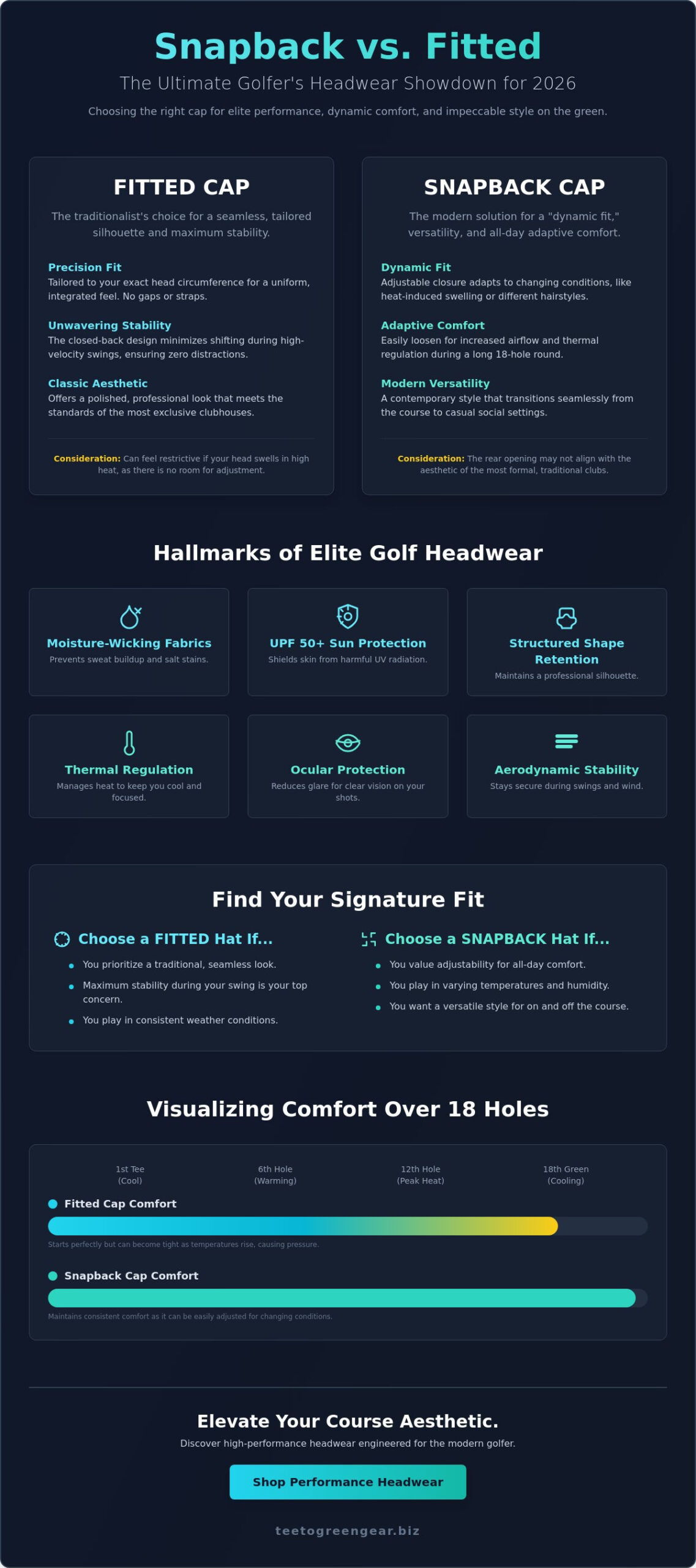
Examining the architecture of high-end headwear reveals that the choice of a snapback vs fitted hat for golf is a matter of structural engineering. Fitted hats are defined by their closed-back design, which creates a seamless, tailored appearance that many traditionalists find indispensable for a formal clubhouse look. This construction relies on a precise measurement of your head’s circumference, ensuring that the fabric tension is distributed evenly across the cranium. Unlike adjustable models, a true fitted cap offers a uniform profile without the interruption of a rear opening, providing a sense of security that feels integrated with the wearer. This stability is particularly beneficial during the high-velocity rotation of a drive, where any shift in the crown can lead to a momentary loss of focus.
In contrast, snapbacks utilize an adjustable plastic or fabric closure system to provide “one-size-fits-most” utility. This flexibility is essential for golfers who find their head size fluctuates slightly due to hair length or the use of cold-weather accessories. The evolution of golf fashion has seen a significant surge in these lifestyle-oriented designs, as players increasingly prioritize gear that transitions effortlessly from the practice range to social settings. When debating a snapback vs fitted hat for golf, one must also consider the crown height. A structured, high-profile crown provides a commanding silhouette that stays crisp, regardless of how many rounds it has endured.
The Mechanics of the Fitted Cap
Choosing a fitted cap is a commitment to precision. The primary reward is the “clean back” look, which offers an uninterrupted silhouette that complements a sharp, professional outfit. Modern variations often incorporate stretch-fit technology, using elasticized fibers within the crown to allow for a small degree of flexibility. However, the challenge remains in the initial sizing. Even a slight miscalculation can lead to distracting pressure after several hours on the course, making accurate measurement vital for long-term comfort and focus during your round.
The Versatility of the Snapback
The snapback remains a staple for its enduring durability and ease of adjustment. High-quality models, such as a Classic Logo Snapback, feature structured front panels that maintain a professional look over time. This internal reinforcement ensures the hat doesn’t lose its shape even after being packed in a travel bag or exposed to summer humidity. For those purchasing online or selecting a gift, the snapback’s adjustable nature removes the guesswork associated with sizing, making it a reliable and versatile choice for any kit.
Performance on the Green: Which Hat Wins During the Swing?
Achieving peak performance requires equipment that remains invisible during the most critical moments of your game. When considering the snapback vs fitted hat for golf, the “Swing Stability” test is the ultimate benchmark for reliability. At clubhead speeds exceeding 100 mph, the centrifugal force generated during your rotation can cause lesser headwear to shift or lift. A fitted cap relies on its consistent, 360-degree tension to stay anchored, but it lacks the ability to adapt if that tension isn’t perfectly calibrated to your head shape. Conversely, the adjustable nature of a snapback allows you to find that “sweet spot” of security, ensuring the brim stays exactly where you set it from backswing to follow-through.
Aerodynamics also play a subtle yet vital role, especially during rounds on exposed, wind-swept links. While the closed-back design of a fitted hat is theoretically more streamlined, the physical gap in a snapback doesn’t create significant drag for a golfer. The real advantage lies in the brim’s resistance to wind. A high-quality Golf Hat snap back construction provides a rigid foundation that prevents the wind from catching the underside of the bill. This weight distribution is equally important; while some players prefer the substantial, weighted feel of a traditional fitted cap, many modern athletes lean toward the lightweight, ventilated profile of a snapback to reduce neck fatigue over 18 holes.
Stability in High-Velocity Movements
Managing the follow-through is where many hats fail, as the rapid deceleration of the head can jar the crown out of place. To combat this, elite headwear utilizes a high-performance sweatband that acts as an internal anchor, gripping the skin without causing irritation. For those high-wind tee boxes, a “pro move” is to click your snapback one notch tighter than usual. This temporary increase in tension provides the extra security needed to ensure your headwear remains stationary while you’re attacking the ball. It’s a level of dynamic adjustment that a fixed-size fitted hat simply cannot offer.
Visual Clarity and the Address
Your visual field at address is sacred. The curve of the brim should frame the ball perfectly, cutting out distracting glare without encroaching on your peripheral vision. Some high-profile crowns can feel cumbersome, but a well-designed structured snapback maintains enough “crown clearance” to stay out of your line of sight. Crown clearance is the distance between the ear and the hat edge. By maintaining proper clearance, you ensure that the hat doesn’t interfere with your sunglasses or your view of the flight path. This balance allows you to track your shot clearly while the dark under-bill minimizes light bounce-back from the turf.
The Practical Golfers Framework: Choosing Your Signature Fit
Selecting the ideal headwear requires a methodical approach that considers the environmental variables of your home course. While the snapback vs fitted hat for golf debate often centers on style, the practical golfer knows that comfort at the four-hour mark is the true measure of quality. To ensure your selection enhances your performance rather than hindering it, we recommend a structured five-step evaluation process. This framework helps you move beyond basic aesthetics to find a piece that truly supports your game.
- Step 1: Evaluate your local climate and typical round duration. High humidity levels demand more breathability and moisture management.
- Step 2: Measure your head circumference for baseline sizing data. This is crucial even for adjustable hats to ensure the crown height is proportional to your head shape.
- Step 3: Consider your accessory needs, such as where you prefer to store your ball marker for quick access on the green.
- Step 4: Match the hat profile to your facial structure and your Performance Tech Polo collar style for a cohesive, professional look.
- Step 5: Prioritize adjustability for any round expected to exceed four hours to account for physiological changes.
The Physiological Factor: Head Swelling and Heat
One often overlooked aspect of on-course comfort is the way your body reacts to prolonged exertion in the sun. When temperatures climb toward the 90-degree mark, your body’s natural cooling response increases blood flow to the scalp, which can cause subtle head swelling. This physiological shift is why a non-adjustable fitted cap often leads to the dreaded “hat headache” by the back nine. The expansion benefit of snapbacks is a vital feature for long-term comfort; it allows you to loosen the fit by a single notch without losing the stability required for your swing. This small adjustment can be the difference between a focused finish and a distracting afternoon of pressure. It’s about having the flexibility to adapt as the day heats up.
Accessory Integration and Utility
A high-performance hat must do more than just sit on your head. It needs to serve as a functional hub for your essential tools. A structured snapback brim provides a rigid, reliable anchor for a magnetic ball marker, ensuring your most-used accessory is always within reach during a high-stakes putt. Additionally, the way a brim interacts with your sunglasses is critical for visual clarity. Structured profiles often provide better clearance for frame stems, preventing the hat from pushing your glasses down onto the bridge of your nose. While fitted caps may lose their elasticity over time due to sweat and salt exposure, the mechanical durability of a snapback closure remains consistent throughout the season. If you’re ready to upgrade your kit with a piece that balances these technical needs, you can find our full collection of Golf Hats snap back designed for the modern competitor.
Elevating Your Course Aesthetic with Tee to Green Gear
At Tee to Green Gear, we believe that every element of your attire should serve as a dedicated partner in your pursuit of a better scorecard. The ongoing discussion regarding a snapback vs fitted hat for golf often misses the critical intersection of veteran-owned durability and modern performance technology. We prioritize the Classic Logo Snapback because it provides a superior level of versatility that meets the demands of the 2026 season. Our designs are intentionally crafted to complement the Performance Golf Polo, creating a cohesive, elite look that feels both aspirational and grounded in practical utility. This approach ensures that you don’t just look the part, but you feel the reliability of high-end equipment in every movement across the fairway.
The Classic Logo Snapback Advantage
The advantage of our collection lies in the meticulous craftsmanship that defines every piece we produce. Every stitch and panel alignment is executed with precision, reflecting a commitment to excellence that is rare in standard headwear. We’ve optimized these crowns for maximum breathability, ensuring you remain comfortable during those humid summer rounds where thermal regulation is key to maintaining your focus. This synergy extends to our functional accessories; our hats are built with the structural integrity required to securely hold a magnetic ball marker, ensuring your tools are always at hand without compromising the hat’s clean lines. For a complete pro-grade kit, pairing your headwear with our sustainable bamboo tees demonstrates a commitment to quality that extends to every detail of your game. It’s this thoughtful selection of materials and attention to the nuances of the sport that defines the discerning insider’s choice for 2026.
Final Verdict: Snapback or Fitted?
In the final analysis of a snapback vs fitted hat for golf, the snapback stands out as the superior option for the modern competitor. Its unique ability to provide a dynamic fit and stability during a high-velocity swing, combined with a structured look that transitions perfectly to the clubhouse, makes it an essential piece of equipment. While fitted caps offer a certain traditional appeal, they lack the adaptable nature required for the physiological changes that occur during a long day in the sun. We’ve seen that the most successful players are those who prioritize gear that adapts to their needs rather than forcing a static fit. Before finalizing your selection, it’s also worth reviewing the standards for golf course approved hats to ensure your chosen style meets the dress code requirements of every club on your calendar. We invite you to Shop the Collection today to find the perfect headwear that reflects your dedication to the sport and your passion for excellence. Elevate your game with a hat that works as hard as your swing.
Mastering Your Performance Aesthetic for the 2026 Season
Winning on the course requires more than just a refined swing; it demands gear that eliminates distractions and supports your focus through every environmental challenge. We’ve explored how the structural integrity of your headwear impacts both your visual clarity and your physical comfort as the day progresses. When evaluating a snapback vs fitted hat for golf, the versatility of an adjustable closure consistently provides the superior solution for managing physiological changes and high-wind stability. By choosing a crown that offers both a professional silhouette and technical resilience, you ensure that your focus remains entirely on the target.
Tee to Green Gear is proud to be a veteran-owned and operated brand dedicated to performance-driven design and elite craftsmanship. Our collection utilizes elite moisture-wicking fabrics that maintain their structure while keeping you cool during the most intense summer humidity. It’s time to equip yourself with headwear that reflects your commitment to excellence. Upgrade your headwear with our Classic Logo Snapback and experience the difference that precision engineering makes. We look forward to seeing you achieve your personal best on the green.
Frequently Asked Questions
Are snapback hats considered professional enough for traditional golf courses?
Modern snapbacks are absolutely professional enough for traditional courses when they feature a structured crown and clean, sophisticated branding. While older styles were often too casual, the refined aesthetic of the 2026 season allows these caps to pair seamlessly with a Performance Tech Polo. Many prestigious clubs now accept high-quality snapbacks as standard attire, provided the player wears them forward to maintain a respectful, polished appearance during play. For a deeper understanding of what qualifies as golf course approved hats across different club environments, reviewing the latest headwear etiquette guidelines can help you avoid any dress code surprises on the first tee.
How do I prevent sweat stains on my performance golf hat?
Preventing sweat stains requires selecting headwear equipped with advanced antimicrobial and moisture-wicking sweatbands. These technical fabrics are designed to pull perspiration away from the skin and disperse it quickly to prevent salt buildup. After a particularly humid round, rinsing the internal band with fresh, cool water and allowing it to air dry in a shaded area will preserve the fabric’s integrity. This proactive care ensures your headwear remains crisp and professional for every outing.
Do fitted hats provide better protection against the wind than snapbacks?
Fitted hats don’t inherently offer superior wind protection compared to adjustable models. While the closed-back design is streamlined, a snapback allows you to manually tighten the fit by one notch when facing high-velocity gusts on an exposed tee box. This dynamic adjustment often provides a more secure anchor point than a fixed-size cap. When deciding on a snapback vs fitted hat for golf in windy conditions, the ability to customize tension is a significant functional advantage.
Can I use a magnetic ball marker on any golf hat brim?
You can’t use a magnetic ball marker on every brim; it requires a structured foundation to support the weight of the accessory. High-performance headwear is designed with reinforced internal panels that provide a stable surface for the magnet to grip without sagging. If the brim is too soft or unstructured, the marker may shift during your swing or fall off while walking. Always ensure your cap features a rigid bill to maintain the security of your tools.
What is the best way to clean a structured snapback without losing its shape?
Hand washing is the safest method for cleaning a structured snapback without compromising its sophisticated silhouette. Avoid the washing machine, as the agitation can break down the internal buckram that maintains the crown’s height. Use a soft brush and mild detergent to spot-clean the fabric, then rinse with cool water. To preserve the shape, air dry the hat by placing it over a rounded object or a dedicated hat frame to ensure the panels dry uniformly.
Which hat style is better for golfers with a larger head size?
Snapbacks are the preferred choice for golfers with larger head sizes because they offer versatile, “one-size-fits-most” adjustability. Finding a true fitted cap in an exact larger size can be a logistical challenge, often leading to a fit that is either too restrictive or lacks proper crown depth. The open-back design of a snapback provides the necessary room for comfort while allowing you to secure the cap precisely to your preference, ensuring a distraction-free round.
Is there a difference in breathability between fitted and snapback hats?
There’s a noticeable difference in breathability when comparing a snapback vs fitted hat for golf during peak summer heat. The rear opening of a snapback naturally facilitates better airflow around the back of the head, whereas fitted caps are fully enclosed. Many modern golf hats also incorporate laser-perforated side panels to enhance thermal regulation. This increased ventilation is essential for preventing heat buildup and maintaining comfort during long, 18-hole rounds in high humidity.
How should a golf hat fit to ensure it does not move during a swing?
A golf hat should fit snugly enough to remain stationary during a 100+ mph swing without creating uncomfortable pressure points on your forehead. It should sit approximately half an inch above your ears, with the internal sweatband acting as a stable anchor against your skin. If the hat shifts during your follow-through, it’s either too loose or the crown is too shallow for your head shape. Achieving this balance ensures your headwear remains invisible to your focus.
Disclaimer
“Tee To Green Gear utilizes modern content and SEO technologies to help deliver golf-related articles, product insights, and apparel content. All published material is reviewed for quality, accuracy, and brand consistency.”
